Quoin
The agent edits, you decide.
A macOS text editor where AI agents are first-class users. An agent connected over MCP reads and edits the live buffer, unsaved changes included. Every agent edit lands as one undoable step, and nothing touches disk until you press save.
- Platform
- macOS 14+ · Swift + AppKit
- License
- MIT, open source
- Agent surface
- 11 MCP verbs, read and write
- Built-in AI
- None, by design
- Current release
- v1.1.0, September 9, 2026
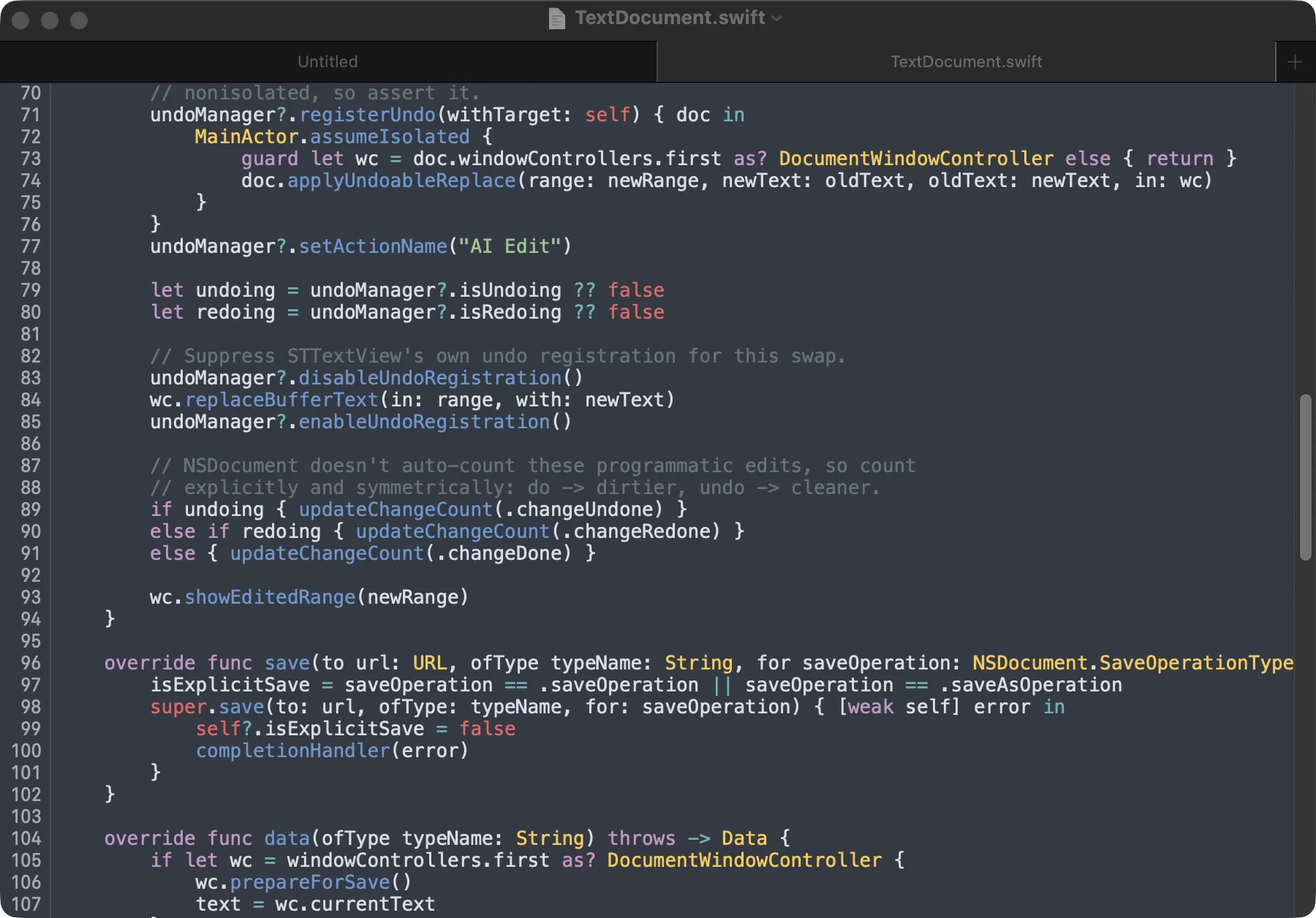
Tree-sitter highlighting
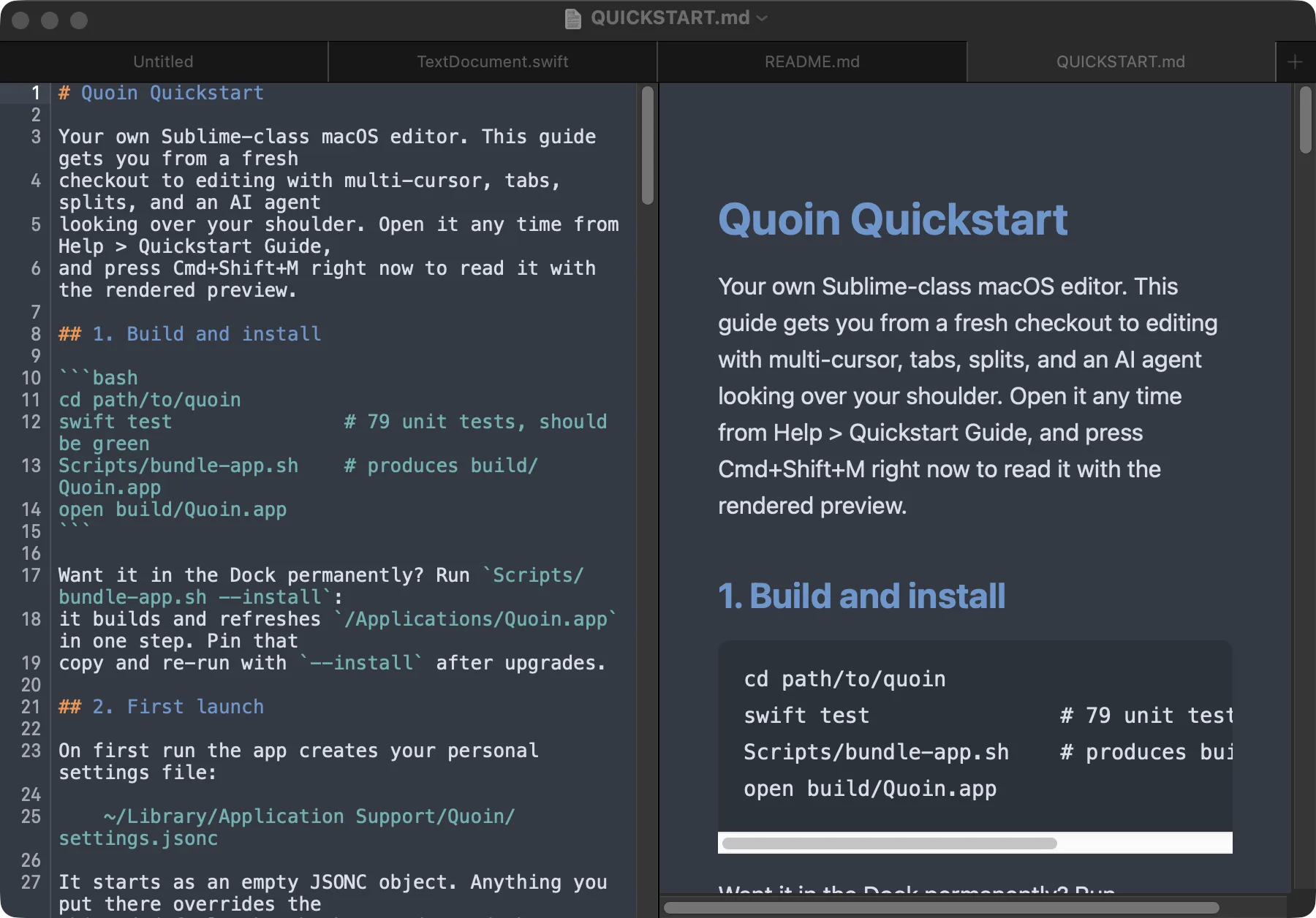
Markdown + live preview
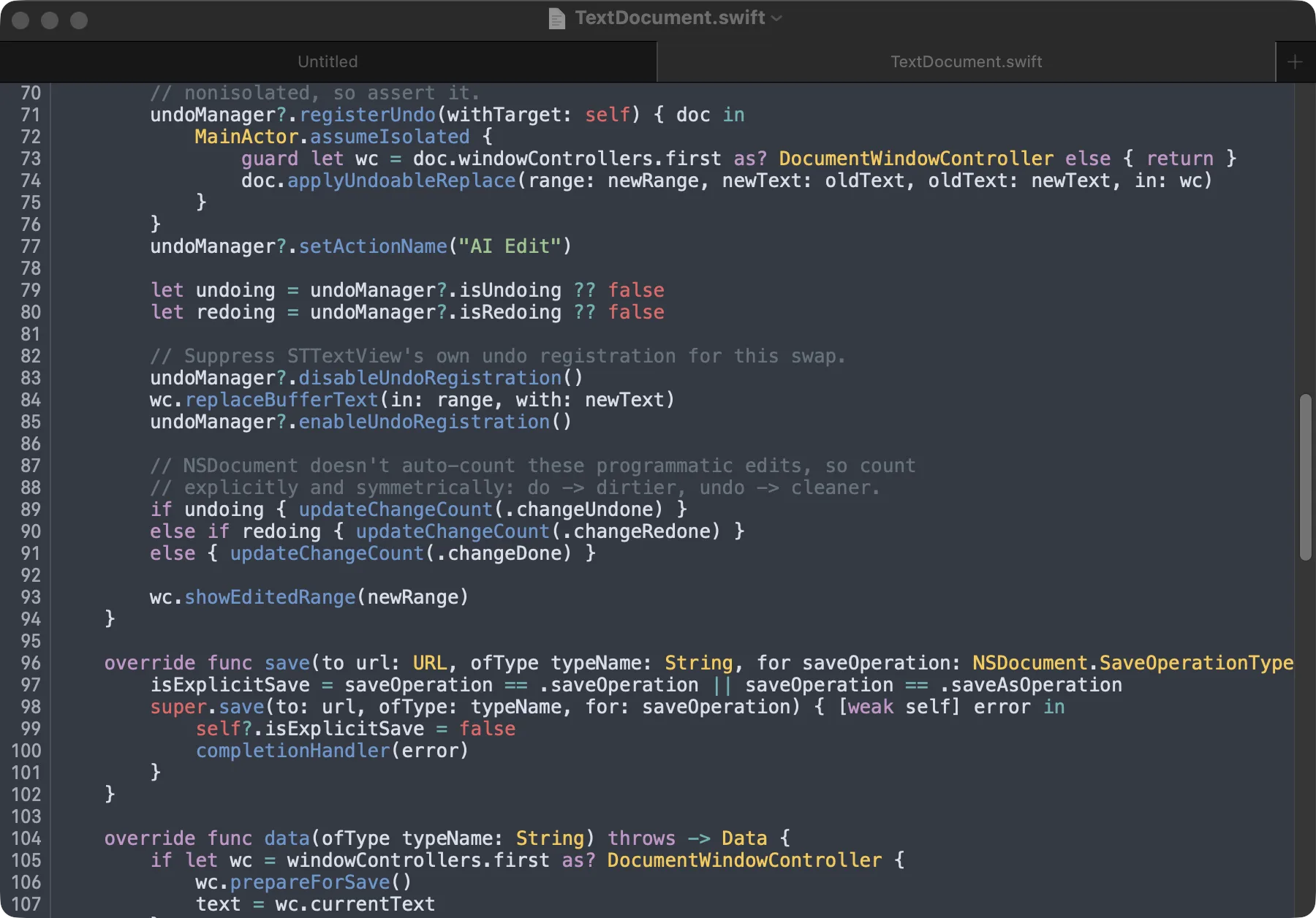
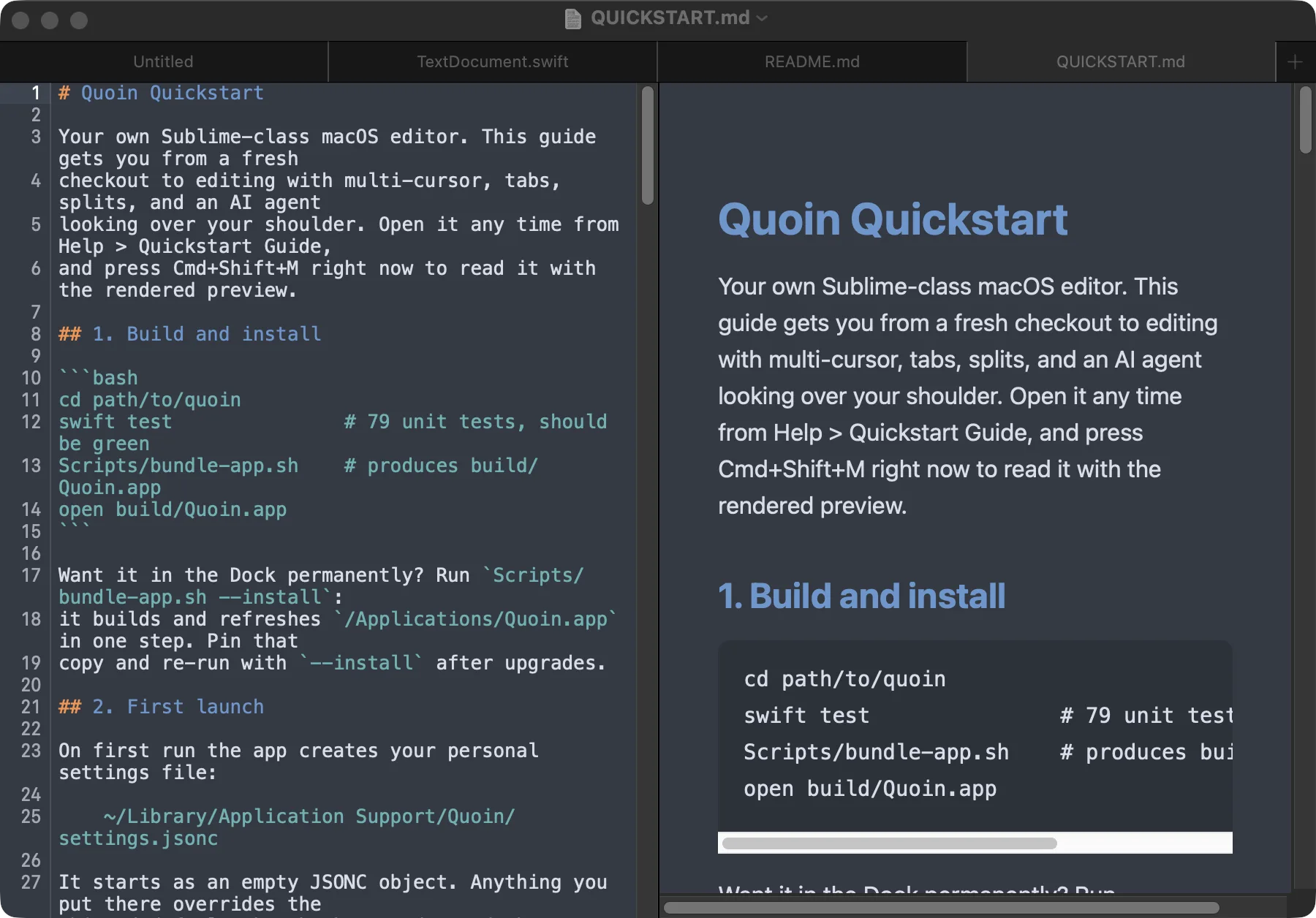
Left: the Mariana scheme on the very code that makes agent edits undoable. Right: markdown coloring beside its rendered preview. Click either still for full resolution.
The name
A quoin (pronounced “coin”) is the letterpress wedge that locks loose type into the frame so it can print. That is this editor’s job in the agent era: hold the text steady while agents work on it. Nothing is committed until you lock it in.
Why there’s no AI inside
Quoin ships no model, no API keys, no chat pane. It is the instrument: you bring whatever agent you want, over MCP, and swap it the day a better one exists. Editors that embed a single vendor’s agent make the editor the gatekeeper; here the editor’s whole job is to give any agent honest access to the buffer and give you the only save button.
The control model
The running app listens on a local unix socket only; there is no network listener. The agent gets eleven verbs: read the buffer, a window of its lines, and the selection; open files; list and run editor commands, where save, revert, close and quit are refused; and four ways to write, by selection, by line range, by offset range, or the whole buffer. Each write registers its own inverse on the document’s undo manager, so a human can step backward through an agent’s work edit by edit, back to a pristine buffer. The buffers are also MCP resources a host can subscribe to, so it is told the moment the text changes instead of polling; three prompts package the editing choreographies, and a one-click bundle installs the server into Claude Desktop. Beyond the agent surface it is a full working editor: native tabs, tree-sitter highlighting, fuzzy file open, command palette, split panes, multi-cursor, Sublime’s menu vocabulary, hot exit.
Agent-native instruments
One principle, two domains
Bounded verbs for the agent, commit rights for the human. Quoin applies it to text; CBCTScope applies it to reading CBCT volumes.
See CBCTScope